How to Find Hidden Ramen Shops—Digging for Your Own Bowl with a Map and Your Feet
The truly great hidden ramen shops never top review rankings. Here is how to find them—reading location, hours and menu, and squeezing the most out of a map app—from the perspective of someone who eats hundreds of bowls a year.
Hidden ramen shops never make the top of search results
"I want good ramen nearby." You open your phone, and what comes up is the same chain restaurants and the same names that dominate every review site. Some of them are fine. But the shops that genuinely deserve the word "hidden" almost never appear on that list.
The reason is simple: the shop is not investing in the web. An owner focused on cooking great noodles will not necessarily spend time on search engine optimization. The sign is small. There is no social media. And precisely those shops are the ones where you can often sit down without a wait.
The shops that don't show up on review sites are the real hidden gems. The skill of finding them starts with swimming across a map.
This article is about how to find those shops that don't show their faces—using your feet and a map app, the practical way.
Stop searching—the map beats the search box
Typing "best ramen near me" into the search box is a habit worth dropping. The top results are saturated, mostly pages that competing blogs have mass-produced from the same template.
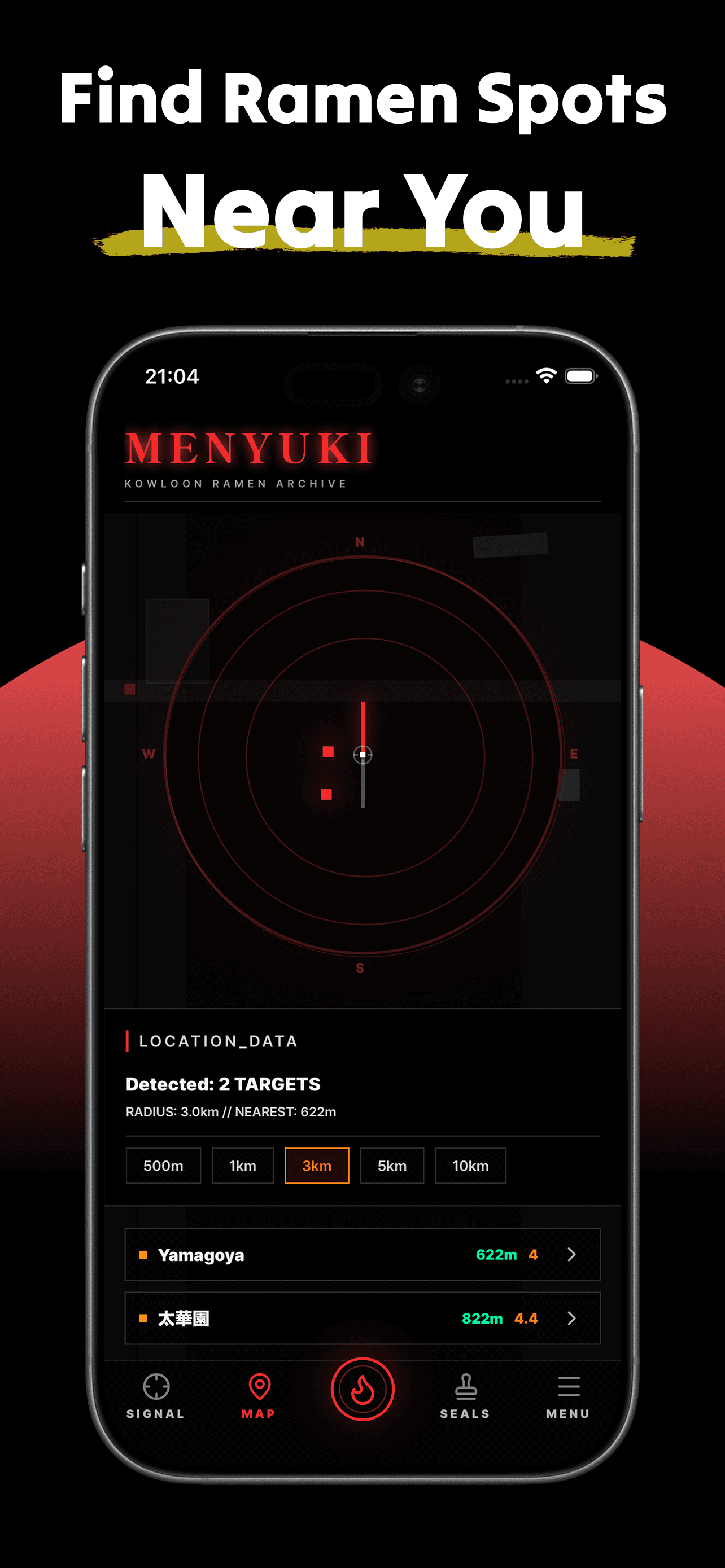
Instead, swim across the map around your target area. Google Maps works, or a ramen-focused app works. What matters is having a screen that lets you see, "roughly how many shops are there in this whole area?"
Lenses for swimming the map
- Shops set back from the station, on a side street one block off the main road
- Shops with short hours—open only for lunch or only for dinner
- Shops with few reviews (under 50 or so) but a relatively high rating
- Shops rated around 3.8 stars whose reviews repeatedly mention "regulars," "for years," or "local"
- Sparse pin clusters on the map tend to hide the best finds
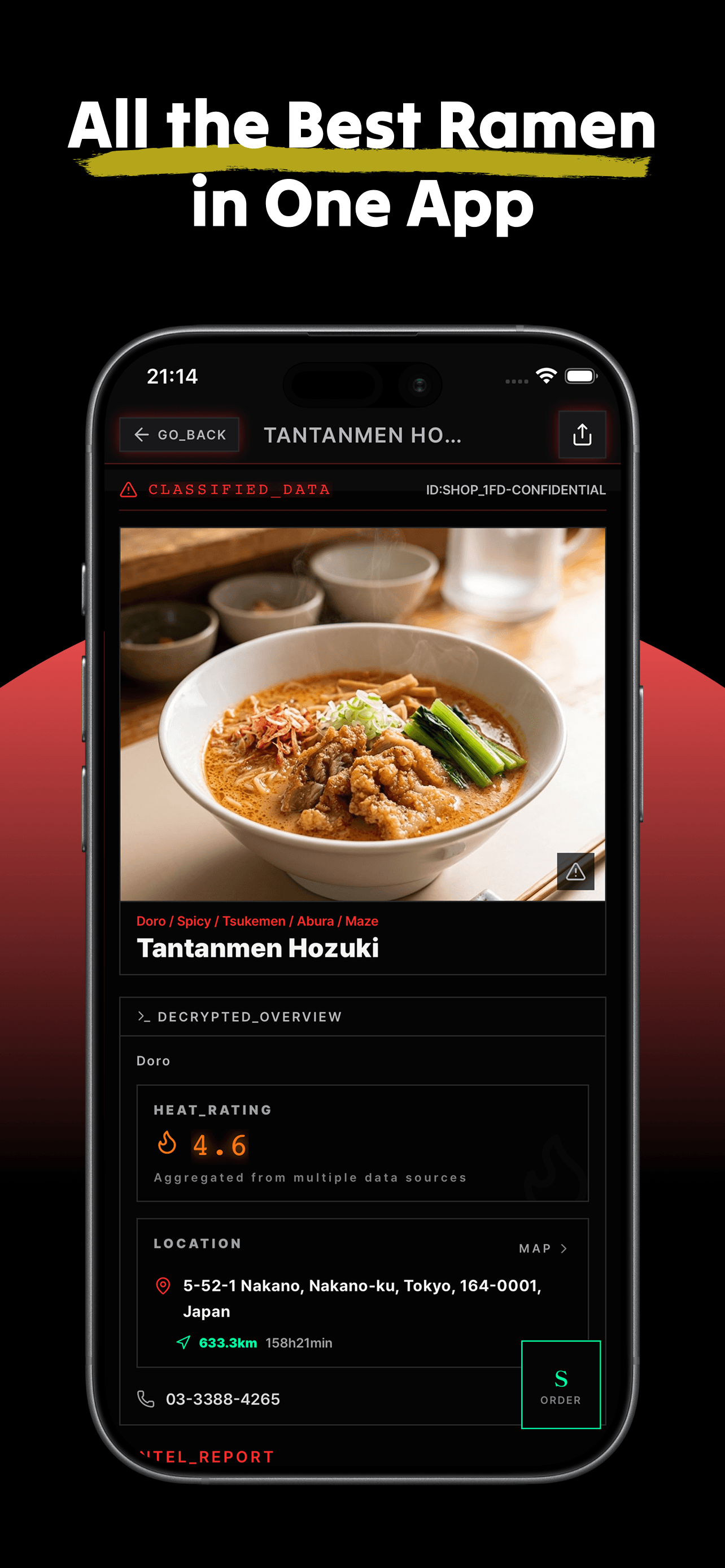
Why "few reviews but high rating" shops hit the jackpot
Review counts grow when a place is easy for tourists to write about and looks good on social media. Famous shops in tourist areas rack up hundreds or thousands of reviews, while a residential shop supported by locals might add only a handful a month. Do not decide by the star rating alone; read what is being rated, when, and by whom.
Use Street View and posting dates to tell whether a shop is still active
Street View can show you the entrance, noren curtain, whether there is a ticket machine, the parking area, and the direction of the line. The images may be old, however, so they cannot confirm current operations by themselves. Sort reviews by newest and check whether anything was posted in the past few weeks and whether posts cluster around weekday lunchtime. Frequent weekday-lunch reports may indicate support from nearby workers and local customers.
Give X, Instagram, and specialist databases separate roles
- X — best for same-day updates on opening, sellouts, and limited bowls. Search recent posts using the shop name and area.
- Instagram — useful for seeing the bowl, interior, and feel of the line. Try an area name plus the Japanese hashtag for ramen, "ラーメン."
- Ramen Database — check reviews by specialist users and regional rankings.
- Tabelog Hyakumeiten — use the selected shops, and highly regarded local shops that missed selection, as starting points.
No single service is decisive. Layering live updates, photos, and specialist reviews makes you less likely to be misled by stale information or a temporary rating spike.
Field sense
A shop that looks "unpopular" by the numbers but has a dense core of true fans—this structure shows up more and more the deeper you dig. It's evidence the shop runs on the silent support of nearby regulars, not tourist reviews.
Read a shop through its location, hours and menu
Once you find a candidate, the next step is judging from afar whether it is actually worth the trip. A few lenses for avoiding on-site disappointment.
Location: shops in low-traffic spots tend to be strong
A shop on a back alley or in the middle of a residential district—one with no natural reason to draw foot traffic—is worth paying attention to. If it survives without that advantage, it is almost certainly pulling people in with taste.
Shops inside commercial complexes can lean on the location's built-in footfall, which slightly loosens the pressure on flavor (with plenty of exceptions, of course). Personally, finding a 4- or 5-seat shop tucked in an alley makes my day.
Hours: short hours mean the owner is uncompromising
"11am–2pm, or 6pm until the noodles run out." Shops like this signal that the prep work takes time, and they can only serve within a narrow window. In contrast, shops open from early morning to late at night have no choice but to rely on systems that keep flavor consistent.
The rule for avoiding misses
When targeting short-hours shops, line up 10 minutes before opening. That is the rule. Especially once noon hits, they sell out fast.
Menu: shops with few items are betting on a single bowl
A shop that only lists "soy sauce ramen" and "tsukemen" tends, in my experience, to hit more often than one offering soy, miso, salt, tonkotsu, tsukemen and abura soba all at once. It is evidence that resources are concentrated on a narrow range.
Menu-reading tip
Shops where the menu just says "ramen" with no clever naming are also a good sign. A shop that bets on taste over a catchy name is usually run by serious people.
Reverse-search noodle suppliers—an advanced discovery method
You may spot names such as Mikawaya Seimen, Asakusa Kaikarou, or Sakai Seimen on noodle crates outside a shop or in official posts. A noodle supplier is a clue not only to thickness and texture, but also to a shop's lineage. Search the supplier name with the area, then follow client-shop introductions and opening announcements; this can lead to new shops that have not reached the rankings yet.
Keep photos of noodle crates and observations inside the shop from interfering with service. There is also no need to press the shop about its business relationships.
Build your own list of shops
Once the habit of hunting hidden ramen sets in, a new problem appears: how do you keep track of what you find?
Common complaints
- "I found a shop the other day—where was it again?"
- "I went somewhere last month, forgot the name, but I remember the taste."
That kind of forgetting wastes the effort you spent searching. Writing in a memo app or posting to social media takes effort and won't last. So keep one lightweight logging system ready.
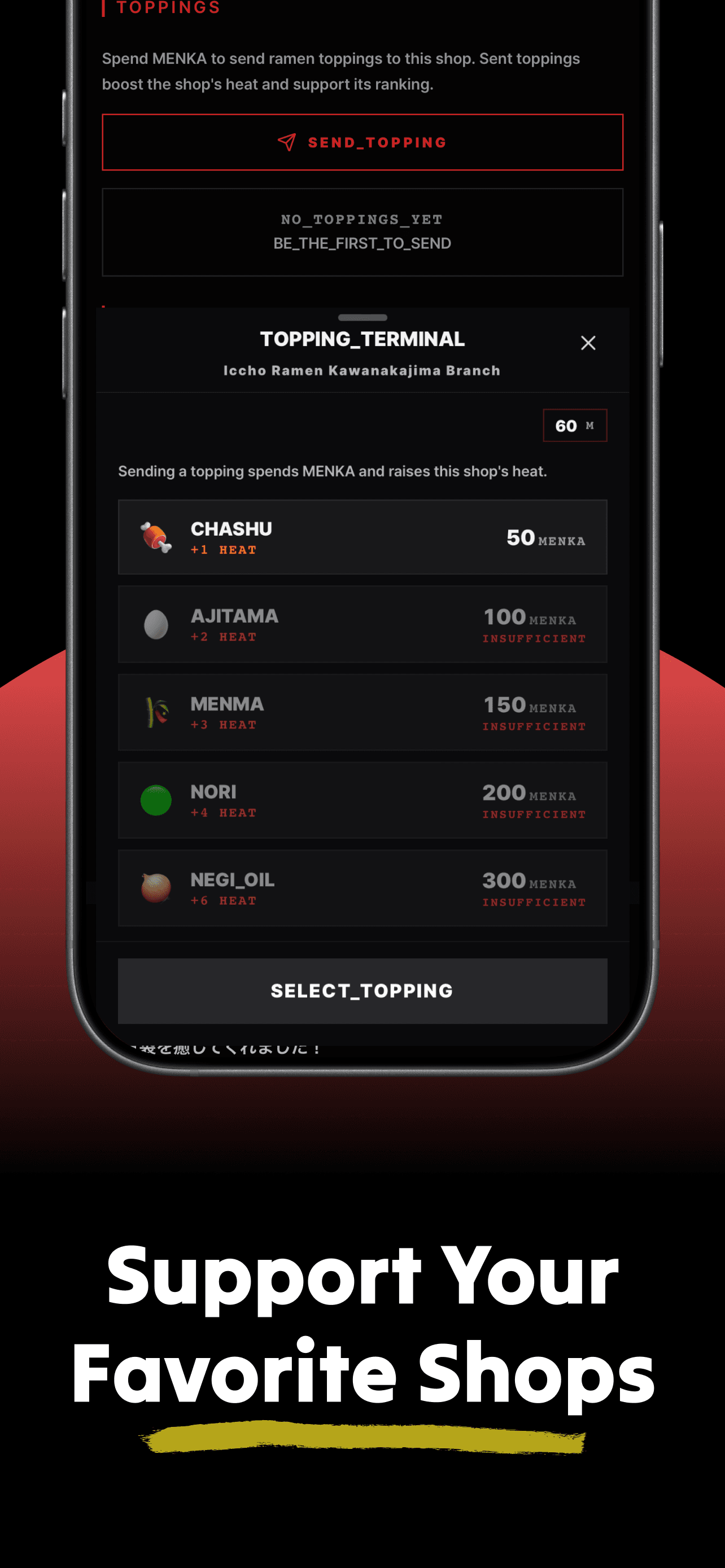
Personally, I use an app that seals (archives) shops I've visited. Search, go, log—the whole loop runs in one app, so motivation never breaks. Each visit adds to a metric called "heat" that feeds a ranking, so my own rameneering gets gamified, which is honestly fun.
The joy of using a map and your feet, again
What makes hidden ramen great goes beyond the taste itself. The hunt and the moment of arrival come as a set.
A bowl worth remembering
Lining up at a top-ranked shop for a bowl that matches expectations is fine too. But a bowl found by swimming across a map, decoding the hours, and finally slipping under a small noren deep in an alley delivers a different kind of satisfaction.
Search on your phone, walk there, sit down, eat, log. With one system that spins this cycle, how you spend your weekends might shift a little.
The more hidden the shop, the more you should confirm and be considerate
Independent shops may be cash-only, close unexpectedly or early, or keep irregular holidays. Before leaving, check the latest official social posts and recent reviews, and carry cash.
Etiquette for photography and social posts
- Do not photograph the interior, kitchen, owner, or other customers without permission
- Follow signs such as "No photography" or "Ramen only may be photographed"
- If a shop does not want its location or hours publicized, ask before posting
- When busy, do not take repeated photos; prioritize eating and freeing the seat
In closing—hunting skills, once learned, become an asset
To recap, here are the points in one list:
Key takeaways
- Skip search rankings; survey an area on the map instead
- Prioritize shops with few reviews but high ratings
- Combine Street View, recent posts, and specialist databases to confirm current operations and reputation
- Reverse-search noodle suppliers to trace lineages and new openings
- Read a shop's seriousness through location, hours and menu
- Prepare for cash-only payment, unexpected closures, and photography bans
- Keep a lightweight logging system for what you find
"Hunting skills" generalize well beyond ramen. The same approach works for finding regional ramen on a trip, or slipping into a bowl on a business trip night.
Once this sense sets in, you stop being swayed by review sites. You build a grounded style of eating—trusting your own eyes, feet and tongue. The habit of hunting hidden ramen, I think, makes the pleasure of food a little more your own.